martial arts conditioning header martial arts conditinoing graphic


HOME
ABOUT
TESTIMONIALS
ARTICLES/WORKOUT TIPS
PRODUCTS
BLOG
MYSPACE
LINKS
CONTACT

"Generally Speaking...” (orginally published at mmaweekly.com)


I recently received an email from a trainee who had bought my workout programs. He wanted to know if the workouts I'd designed would help him increase his kicking and punching power, as he trained in only kickboxing. (He's from Holland, and there isn't much, if any, MMA to be had there.)

The answer to his question was pretty simple - "Absolutely they'll help you increase your kicking and punching power."

Now, the reason for this is two-fold. First, because the workout programs I design and sell are kick-ass. (hehe ;-) Second, because while the programs I design are kick ass, they are designed with "general" strength & conditioning goals in mind - not specific ones.

S&C training is really just a form of what is called GPP - General Physical Preparedness. What is GPP? GPP is essentially - in a very general sense - overall physical preparedness. How strong are you? How fast are you? How powerful are you? How is your muscular-endurance? What about your cardiovascular endurance? What about your agility? What about your work capacity? (And the list could go on.)

None of this measures directly into your MMA training, nor how strong/powerful/conditioned/etc. you are at certain elements of MMA. All GPP is, is how ready you are overall.

Think of it this way - say you're trying to build a building that is very tall. GPP is part of that foundation. It makes your game strong (like a strong foundation can make a building strong), but by stacking it high, it can give you a higher point to start from. That is sort of what GPP can do.

We've all heard the debates of "strength vs. technique." Why everybody thinks it has to be one or the other astounds me. Why not have BOTH? But anyway... Say you're fighting a guy with very little technique. Now, say that guy is just your average person. He's nothing extraordinary from a physcal perspective. And say that armbars are your specialty. This guy has rolled once or twice, but very little. Are you going to have a tough time armbarring him? Probably not - you should be able to secure it very quickly.

Now, let's say that your opponent, instead of your average person, is multi-time World's Strongest Man, Mariusz Pudzianowski. Do you think you're going to go right in and armbar him? Highly unlikely. The guy is just too damn strong. Now, can you grapple with him some, try to wear him out, wait until he makes a mistake, leaving that arm wide open, and then sink on the armbar? Sure you can. Even then will it work? Probably - but with how strong and powerful a guy like Pudzianowski is, it's going to take some amazing technique to do it.

Now, let's add another twist to the equation - say (all other things equal) that you were three times as strong and powerful as you are now. Everything else is the same - your level of technique is the same, your conditioning, your size, everything aout Pudz, etc. (I know, it's not rational, but just humor me for a minute.) Do you think you'd have such a tough time armbarring him? I highly doubt it. Why? Because your technique has just become that much more effective with superior strength.

Let's look at a non-MMA example. Steroids have become a major issue in baseball in recent years. What was one of the big things that drew this attention? All the home runs being hit. How are these guys hitting so many more home runs? Because they're just that much stronger. They're swings (i.e. technique) are the same. They're probably still going after the same type(s) of pitches. And the pitching is relatively still the same. So how are they hitting so many more out of the park?

Easy - with the increased strength, the ball goes further. Before, they only had the strength to (let's say) average a 300 foot shot with less than optimal technique. That's a fly-out in many parks. But now, with all that added strength, the exact same swing on the same pitch is sending the ball 340-350 feet. That fly-out just became a home run.

Well, that's the kind of effect that increased strength (as well as power, conditioning, and all other aspects of GPP) can have on your MMA.

Now take note - we're not talking about specifically designed exerices for MMA (that would consitute SPP - or Specific Physical Preparedness - a subject for another article). This isn't finding a way train the specific muscles you use when you shoot in for a takedown, in the same motion(s) when you shoot in for a takedown.

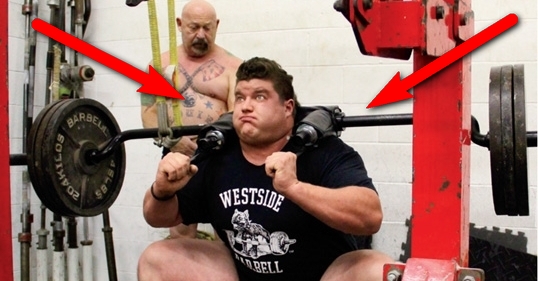
Rather, this is about getting your squat higher. Making your legs more powerful. Increasing your relative strength and power (i.e. strength/power to bodyweight ratio) so that you can move your body quicker. What all this does is not to instantly make your shoots quicker, but rather to give you the potential for quicker shoots.

So, once you have this increased GPP, how do you apply it to your MMA (or in the case of the email I got, kickboxing)? By doing your skills training. Hitting the gym and drilling and rolling and sparring. This will make you a better MMAist. As they say, "skills pay the bills."

Having more powerful legs won't (necessarily) in and of itself, give you better shoots. But drilling takedown attempts with more powerful legs will.

Increase your GPP, and increase your overall physical abilities and capabilities. You'll find yourself a better MMAist because of it.

Train Hard, Rest Hard, Play Hard.