|
The MMA Workout Program designed for a UFC Champ...
How about a cardio workout that doesn't need a gym, machines, or even running?
These are the books and programs that started it all. Find out about Wiggy's methods on training strength-endurance, sandbag training, and how to intensify your workouts! Simply put, a kick-ass little workout timer that's small and easy to carry, easy to use, and even easier on the wallet! The best book on Intermittent Fasting on the internet - it's how I eat! The
only supplement company Wiggy has ever endorsed. All-natural ingredients,
great tasting, and most of all, it WORKS! |
"The
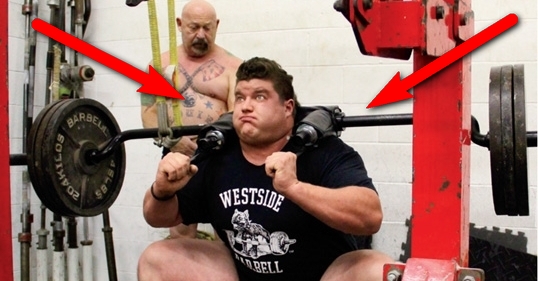
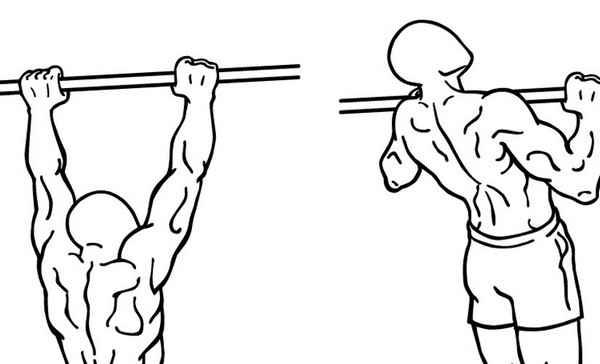
Unstoppable Force vs. The Immovable Object" Catchy title, huh? But wasn't it for a pro-wrestling match? I don't remember...either way...Watcha gonna do, BROTHER, when the biggest sandbag in the world falls on you!! *hulks up and flexes* Um, anyway, uh...let's get to this week's column...yeah... This week, I want to get into something that will hopefully stick in your mind when designing strength programs and trying to figure out what kind of exercises to use. In any resistance exercise, you have three things present: a movable object, an immovable object, and the force generated between the two. In most cases, the movable object is the resistance itself – a barbell, a dumbbell, a sandbag, your body (in bodyweight calisthenics), or even the limb you're moving (in the case of using resistance bands or surgical tubing). Again, in most cases, the immovable object is either the ground or a piece of equipment – more on this in just a little bit. The force generated between the two is caused by you, the trainee. You brace yourself (either standing and using your musculature, or by being on or holding onto a piece of equipment) on the immovable object, and move the movable object. You are causing there to be a greater distance between the movable and immovable objects. Let's take a look at an example or two: You deadlift a barbell (BB). The BB is the movable object, because, well, you can move it. The ground is immovable. Since you're moving the barbell, you're the producing the force causing there to be distance between the two. Let's say you're doing chins. Your body is the movable object, as it's what is being moved. The chin bar is the immovable object (a piece of equipment secured to the ground). And once again, you're producing the force between the two. In this instance, the distance between your body and the chin bar isn't increased - rather it's between your body and the ground (which, because the chin bar is connected to it, and exention of the chin bar). Now, this might seem kinda basic – sort of one of those “Yeah, well no kidding, Wiggy” type of things. But let's look at it a little more... When designing the strength portion of programs, it is can be a good idea that exercises are chosen that can have some direct carryover to MMA. For example, since punching power starts at the hips/waist, you might want to incorporate some sledge hammer strikes or twisting medicine ball throws to help increase power output. And heavy sandbag shouldering will help you built the strength you might need to pick up and slam your opponent. Other “basic” lifts such as squats, overhead presses, rows, etc. build good overall basic strength. The strength built can be applied to MMA (strong and powerful legs, for example, can help make you more explosive for quicker takedowns), but there is not necessarily any direct carryover. Both kinds of exercise (those that directly carryover and those that don't) are fine – neither is necessarily “better” than the other. They are not mutually exclusive – they're just different. Now, sometimes I read that certain exercises will have more carryover because the movement may somewhat mimic an MMA skill. This is where the idea of movable and immovable objects, as well as force applied between the two comes in. Let me move away from MMA for a minute... I once read a Q&A done by a VERY successful and highly-touted strength and conditioning coach. He trains many elite athletes, including professional football and baseball players, wrestlers, basketball players and more. In this particular Q&A, he was asked why he (for the most part) chooses the bench press for his main strength exercise for the shoulder girdle when designing programs for football players. The person who wrote in said something along the lines of (and this gets said a lot) that “there aren't any sports in which you'll be flat on your back and pushing a weight off your chest.” The person wondered why the bench press was considered more advisable than an exercise such as a standing overhead press. The answer the coach provided was that when you take a look at a football player (take an offensive lineman for instance) that when he's pushing off another player, his arms are usually more or less perpendicular to his body. This puts the player pushing in a horizontal plane, and the bench press mimics this better than an overhead press. (NOTE – When it comes to upper body pushing and pulling exercises, they can be done in two planes – vertical and horizontal. Vertical is considered to be parallel with the body, such as overhead presses, chins, or pullups. Horizontal is considered to be perpendicular to the body, such as bench presses or rows.) Now, I only partially agree with this. When considering plane of motion, he's completely correct. However, the movable and immovable objects are completely different, and make the movements (a bench press and pushing against an opposing football player) very different. Let's take a look at the two... When performing a bench press, the barbell is the movable object. The ground is the immovable object, but since your body is steadily secured on a bench, that is steadily secured on the ground, you could say that your body is an extension of the immovable object. The force you provide is between your body and the barbell. However, let's take a look at pushing away an opposing player. The player is the movable object, and the ground is the immovable object. You still need to push the movable object (the player) away from the immovable object (the ground), but this time, your body isn't braced against a piece of equipment that is braced by the ground. YOU have to brace yourself using your legs, back/posterior chain, and core. This is part of the overall force you have to now exert, instead of just pushing a weight away from you. Guess what? The two are totally different. Can the player exert the same amount of force standing up as he can laying down? Maybe, maybe not. But I think you'd agree that the bench press doesn't have the carryover it might seem. Now, think about this option: say you have a sled, car, wagon, or whatever. On the front of it, you have two ropes tied to it, with handles on these ropes. You stand in front of the sled, facing away from it. You grab the handles, put your hands at your chest (as if you were to do a bench press), brace your body, and push, thereby moving the sled forward. In this instance, the movable object is the sled. The immovable object is once again the ground, and you have to brace yourself on it, just like the football player. The force you produce is not only to move the weight, but to also brace yourself. Now, this exercise is in the same plane of movement as the bench press, but don't you think it would be much more useful and have a lot more carryover? Damn stright. Let's get back to MMA... When designing programs, keep this whole idea in mind. Try to add a few exercises that truly mimic what you're doing in the cage or ring – not just look like they mimic it. The next time you're at the gym, try this: Go to the cable crossover machine – finally, a decent use for this giant waste of space! HOORAY!! Um, anyway... Lower one of the top pullies to shoulder level or so. Put the pin on 35 lbs. and grab the handle. Now perform a punching motion. I guarantee it won't be as easy to you as bench pressing a 35-pound dumbbell... Your entire program doesn't have to consist of exercises like this. And sometimes, the exercises aren't real practical. But just keep this idea in mind the next time you decide to use an exercise because you think it will have direct carryover to the ring or cage. It might not have as much direct carryover as you think. Train Hard, Rest Hard, Play Hard.
|
"Hey man, that's so f@#$ing crazy
that you just emailed me, I'm reading your article about sand bags right
now on MMA Weekly! I would love to try one of your workouts. I've read
several of your articles, and I really like your approach...You've got
some great ideas, man. I really liked the sand bag article.Thanks again, and take care," Joe Rogan UFC Color Commentator BJJ Brown Belt US Open TKD Champion, MW & HW TKD Champion "I
have been training in MMA for a year and lifting weights for over two years
consistantly. I have trained in bodybuilding, crossfit, and powerlifting for
different aspects of conditioning. But NOTHING is like your MMA workout plan...As
far as my skills training goes this program has created a buzz by my team about
if I am on the "juice" or not. I am able to run through my partners
and keep going. The cardio work has allowed me to go a whole class without a
break, and then go to my next class and keep the intensity going...I LOVE this
workout plan and want to get some of my teammates going..." "Hey
man, I had my first mma fight in New York last weekend and ended up giving up
30 pounds to my opponent because he was the main event fighter and his opponent
backed out. They asked me to fight up in weight in the main event against this
guy and I won via arm bar submission in the second round. I just wanted to thank
you for the programs with the sandbag because I was stronger and better conditioned
then this guy who has apparently won the gold cup tae kwon do championship 7
out of the last 8 years. If it wasn't for my strength and conditioning, I probably
would have never gotten him to the ground and won. Just wanted to give you a
shout out and say thanks." "It's
cool to see you layout the rep schemes for the power complexes. And I liked
the section on healing shoulders, lots of guys out here have that problem...And
also, good to see you include MFD, I am still a huge proponent of that, I think
it's key." "...it's
like you reached into my head and pulled out what I've been attempting to accomplish
and I'm only on the first 20 pages...approaching conditioning from both ends
is f#cking genius. I was doing it from the intensity point of view only..." |