free fitness article header free fitness article graphic
 
HOME
ABOUT
TESTIMONIALS
ARTICLES/WORKOUT TIPS
PRODUCTS
BLOG
MYSPACE
LINKS
CONTACT

"Bodyweight or Barbells?"

A popular question is being raised more and more often in the Strength and Conditioning realm – should I perform bodyweight calisthenics, barbell (and other weighted) movements, or both? And the answer is…

…it depends.

I know, I know – that is NOT the answer you wanted. But, to adequately address the above question, one must know what they are training for. For example, if you are a middle-aged father, who works a full-time job (plus overtime), raises three kids, tackles projects around the house, and shuttles kids to games and practices 3-4 times per week, then obviously, general fitness and overall health would probably (save for the outside circumstance) be your goal. As such, a good routine of bodyweight calisthenics combined with a decent diet will accomplish this goal. However, if you are an NCAA collegiate football player trying to gain “good” bodyweight for the sake of being a “starter” on the offensive line, then a good weight lifting program would be in order.

Let’s take a look at the characteristics, as well as some of the “Pro’s” and “Con’s” of each. That way, you can then hopefully determine which (or both) will help you attain your individual goal(s).

BODYWEIGHT CALISTHENICS

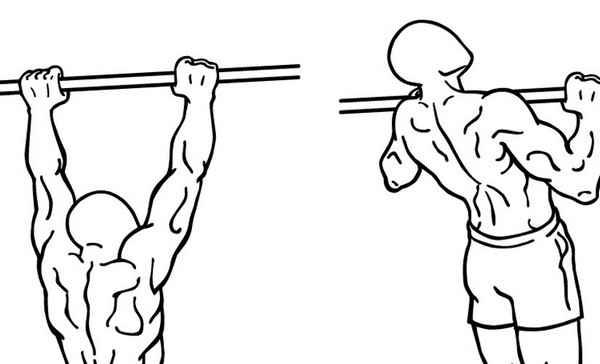
Most calisthenics are done with a higher number of reps in mind. Unless you are somewhat out of shape, most basic calisthenics can be done for quite a few reps (many times, in the hundreds or even thousands). Now, there are some exceptions (say Pull-ups or Chins, for example) and there are some calisthenics that can be pretty darn tough to do until you get strong enough (examples would include Handstand Push-Ups, One-Legged Squats, Flags, One-Armed Chins, etc.). Having said this, it would be fairly logical to say that performing calisthenics (unless it be one of the aforementioned “exceptions”) would not really get you that much stronger (in terms of brute or “limit” strength). They will, however, give you a certain amount of endurance. They can be used to tax the cardiovascular system to a degree, and they are great for just a good overall level of fitness.

Pro’s

-no equipment needed

-can be done anywhere

-it is fairly easy to increase your (overall) rep count

-give you an amount of “body awareness”

-there are countless different calisthenics, so routine change can be VERY frequent

Con’s

-the heaviest you can go in any movement is your bodyweight (this is good for some exercises and bad for others)

-a somewhat limited amount of exercises to build strength, as opposed to endurance (once you get to a certain point, things such as balance, technique, and such become more of an issue than strength)

-doing many (e.g. hundreds or more) of reps may lead to joint “wear and tear” over the long term

-how strong one is in comparison to his bodyweight may or may not be indicative of any real training benefits (e.g. – a 250 lb. lineman is going to have a lot tougher time performing exercises than a 120 lb. gymnast – but the lineman is still stronger)

-it can be somewhat difficult to add muscle size by performing only calisthenics

BARBELL (AND OTHER WEIGHTED) MOVEMENTS

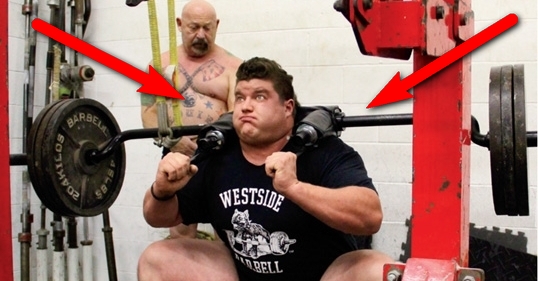
We all pretty much know what we can do with Barbells. Barbell (when I say “barbell,” I use it to mean/stand for all weighted exercises – barbell, dumbbell, sandbag, etc.) movements are virtually limitless in their scope of what they can perform and accomplish. They can be used with lower reps and higher weight to build strength. They can be used with higher reps and lower weight to build an amount of endurance and to induce muscle mass size increase(s). Olympic lifts can be used to develop explosiveness. The only thing limiting how much strength you develop is how much weight you have to put on the bar.

Pro’s

-can accomplish a large variety of goals (strength, endurance, increase muscle mass, strength-endurance, explosiveness, etc.)

-number of exercises is virtually limitless

-the same exercise can be worked in different fashions (e.g. – a professional strongman can perform heavy, 4-5 rep curls to help his pulling strength while a bodybuilder can perform moderate, 8-12 rep curls to help build biceps mass)

Con’s

-money outlay is necessary (either in the form of a gym membership or in buying the weights yourself) – this can be either large or small – it depends on what you’re purchasing

-a certain amount of space is required

-not (necessarily) portable (as are calisthenics)

From here, what you choose to do is up to you. You have to look at your goals, what you have time (and money) for, what you have access to, what you enjoy, etc. Determine which of the above can best help you meet those goals. One last tip – there is no rule that says you have to either perform calisthenics or barbell movements. You can do both…

Set up (or get help in setting up) a good routine, and get to work.

Train Hard, Rest Hard, Play Hard.